
Japanese iced coffee is a unique brewing technique that marries the precision of hot brewing with the refreshing clarity of iced coffee. Brewing hot coffee directly over ice preserves the bright acidity and aromatic complexity that cold brew often mellows. This article dives deep into the origins, sensory profile, equipment, technique, and cultural significance of Japanese iced coffee, empowering enthusiasts to craft a vibrant, nuanced iced coffee experience at home.
Introduction
Few coffee methods capture the best of both worlds like Japanese iced coffee. Unlike cold brew, which steeps coffee in cold water for hours, Japanese iced coffee pulls a hot extraction directly over ice, instantly chilling the liquid and locking in a crisp, bright character that’s almost electric on the palate. This technique has earned its place in coffee circles worldwide for delivering iced coffee that’s aromatic, lively, and impeccably balanced. For those ready to elevate their home brewing beyond the usual cold brew or iced drip, Japanese iced coffee invites a fascinating sensory journey that combines technical finesse with cultural artistry. Here, we’ll explore its roots, flavor nuances, gear essentials, brewing rhythm, troubleshooting pointers, and how it fits into the broader coffee landscape—all to help you nail this refreshing classic at home.
Understanding Japanese Iced Coffee: Origins and Philosophy
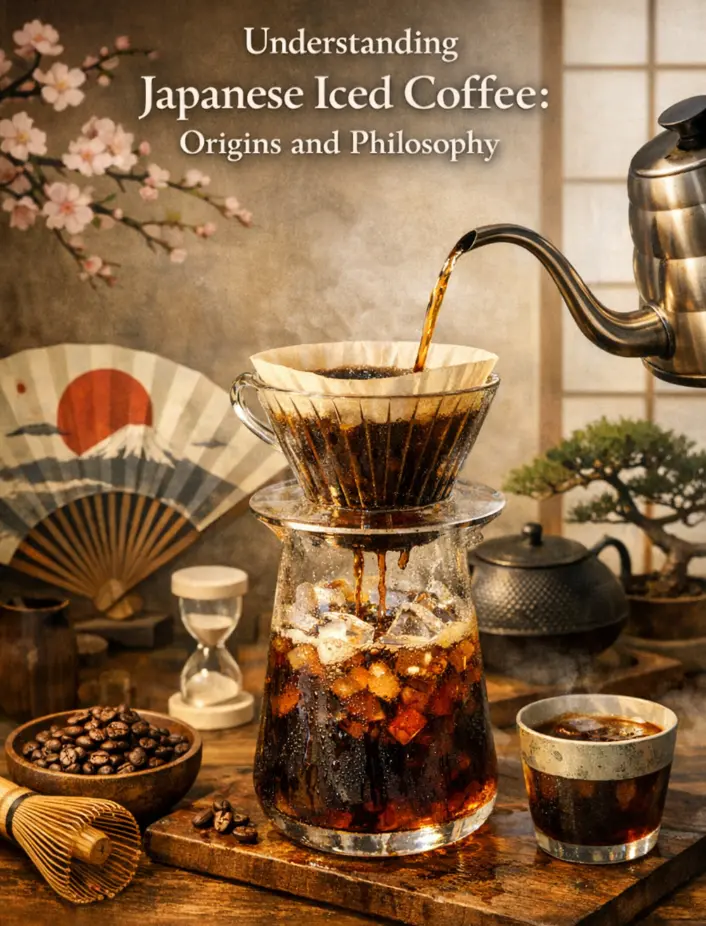
Japanese iced coffee isn’t just another iced coffee style — it’s a thoughtful solution born from Japan’s deep respect for craftsmanship and ingredient integrity. This method, often called flash brew, emerged as a way to enjoy cold coffee without sacrificing the brightness and clarity found in hot brews. Instead of the long, slow extraction of cold brew, it involves brewing hot coffee directly over ice, chilling it instantly, and preserving the fleeting bright acids and delicate aromatics that cold-water extraction usually smooths out. This practice reflects a cultural emphasis on precision, balance, and honoring the raw materials—treating coffee as an art form rather than a quick caffeine fix. As coffee culture worldwide diversifies, Japanese iced coffee stands out by marrying technique with freshness, delivering a vibrant, refreshing cup that celebrates precision and sensory clarity.
The Sensory Experience: Flavor and Aroma Profile
The sensory signature of Japanese iced coffee is its lively brightness and aromatic complexity. When hot coffee meets ice, the rapid cooling traps volatile aromatics, creating a bouquet alive with floral hints, citrus bursts, and vibrant fruit notes. The acidity remains sharp and crisp, cutting through with a refreshing brightness that contrasts beautifully with the smoothness imparted by immediate chilling. Unlike cold brew’s signature rounded, chocolatey sweetness and low acidity, Japanese iced coffee delivers clarity and nuanced flavor layers—each sip revealing subtle shifts in brightness and texture. The mouthfeel is light yet textured, finishing clean and crisp, making it both invigorating and well-suited for hot days or as a palate cleanser between rich dishes. Brewing this way transforms iced coffee from a simple refreshment into a sensory experience you savor slowly.
Essential Equipment and Ingredients
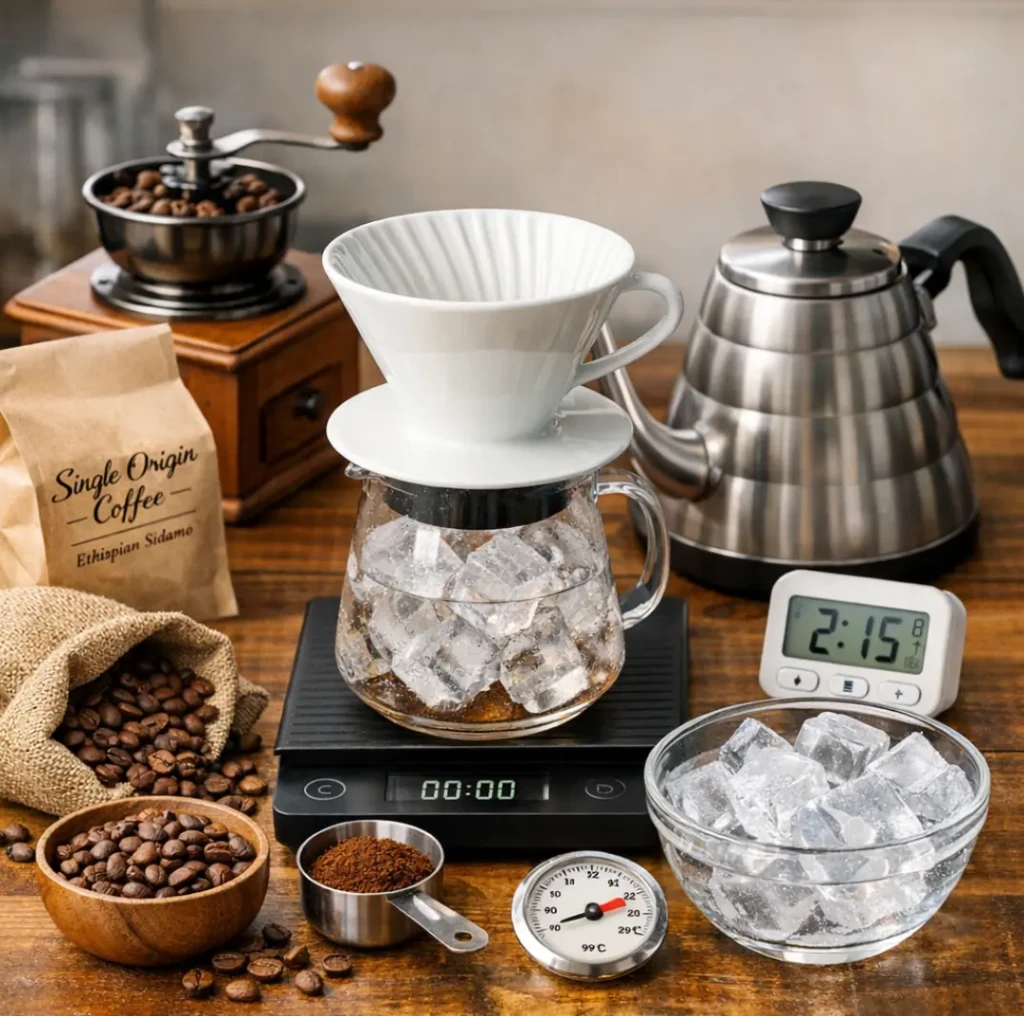
Nailing Japanese iced coffee at home starts with assembling some key tools and selecting the right ingredients. A pour-over dripper like a V60 or Kalita Wave is ideal because it provides precise control over extraction variables; if you’re an AeroPress fan, you can adapt it as well. Freshly roasted single-origin beans with bright acidity—think Ethiopian or Kenyan coffees—shine brightest here, allowing the brew’s clarity to sing. A gooseneck kettle makes a significant difference, allowing you to pour with precision and maintain a steady flow. Scales and timers aren’t optional extras; they’re essential for consistency. Ice quality matters, too—clear, fresh ice cubes prevent off-flavors and unnecessary dilution. Finally, filtered water heated to 90–96°C sets the perfect stage, extracting the coffee’s brightness without accentuating bitterness. Each piece plays a role in crafting a cup that’s balanced, bright, and vibrant.
Step-by-Step Brewing Technique
Start by filling your serving vessel with a generous bed of ice—roughly double the weight of your planned brewed coffee. Place your pour-over dripper on top and prepare your paper filter, rinsing it thoroughly to remove any papery notes. Weigh your coffee carefully and grind it to a medium-fine setting, suitable for pour-over brewing. Bring your water to just off the boil, then initiate the bloom: saturate the grounds with twice the weight of coffee in water, letting it rest for 30 to 45 seconds as CO₂ escapes. Now comes the controlled pour—steady, deliberate pulses of hot water until you reach a total brew weight that doubles the ice’s mass. This balance ensures the coffee isn’t diluted once the ice melts. As hot coffee drips directly onto ice, it chills instantly, locking in aromatic compounds and bright acids before they fade. Serve immediately to savor the cup’s vibrant aroma, crisp acidity, and clean finish—a refreshing alternative that is anything but ordinary.
Troubleshooting and Tips for Perfection
Getting Japanese iced coffee just right can take a few tweaks. If your coffee tastes watery or weak, reduce the ice or increase your coffee dose to concentrate the brew. Bitterness usually indicates over-extraction—try a coarser grind, a slightly cooler brew temperature, or a faster pour to reduce harsh notes. A flat, dull cup suggests under-extraction; then, go finer with your grind or lengthen the brew time a touch. Always use freshly roasted coffee, grinding just before brewing to preserve essential aromatics. Pre-chilling your serving glass helps keep that fresh chill intact, especially on hot days. Don’t be afraid to experiment with different roast profiles or origins—some lighter roasts highlight bright fruitiness, while medium roasts add a bit of sweetness and body. Keep track of your variables—ratios, grind size, water temperature, pour speed—and watch your results sharpen with each brew.
Incorporating Japanese Iced Coffee into Coffee Culture
Japanese iced coffee is a beacon of innovation grounded in tradition, blending the artistry of hot pour-over brewing with the thirst-quenching appeal of iced beverages. Globally, cafés have embraced this method, using it to showcase the brightness and depth of single-origin coffees in a chilled format that sidesteps the syrupy, heavy profile often associated with iced drinks. For home brewers, mastering Japanese iced coffee deepens appreciation for coffee’s nuanced flavors while connecting them to Japan’s meticulous, respectful brewing philosophy. This method enriches the iced coffee scene, offering a fresh perspective that invites sensory exploration and technical mastery. As coffee culture evolves, Japanese iced coffee remains a celebrated approach—one that transforms simple refreshment into a refined ritual, bridging cultures and palates with every chilled, aromatic sip.
Conclusion
Perfecting Japanese iced coffee at home is a rewarding blend of science and sensory delight. This flash-brew method captures coffee’s vibrant aromatics and crisp acidity in a refreshing glass, distinct from cold brew and traditional iced styles. Understanding its cultural heritage, flavor nuances, gear requirements, and precise brewing rhythm empowers you to craft a cup that’s both complex and invigorating. Embracing Japanese iced coffee elevates your daily coffee ritual into a moment of refined pleasure—one that honors coffee’s global craft and the delicate dance between heat, ice, and flavor.

