
This piece breaks down the clear-cut differences between pour-over and drip coffee, focusing on how their brewing processes shape taste, aroma, and the culture of coffee drinking. Understanding these contrasts helps beginners choose a method that suits their lifestyle and palate, making the coffee journey more engaging and flavorful.
Introduction
Coffee brewing blends precision with personal touch, shaping each cup’s character in countless ways. Among the many techniques, pour-over and drip coffee often get lumped together, but their differences ripple through the brewing process and the final sip. For those just starting out, grasping what sets these methods apart adds layers of appreciation—not just for flavor, but also for the ritual and craft behind the cup. Let’s explore how pour-over and drip coffee take different paths from beans to brew.
Understanding Brewing Methods: Pour-Over and Drip Defined
At a glance, pour-over and drip coffee look like siblings—both funnel hot water through coffee grounds to produce that much-needed caffeine kick. But dive deeper, and the story shifts. Pour-over is a hands-on dance: you pour water by hand, often from a gooseneck kettle, carefully controlling the flow and timing to coax flavor from the grounds.
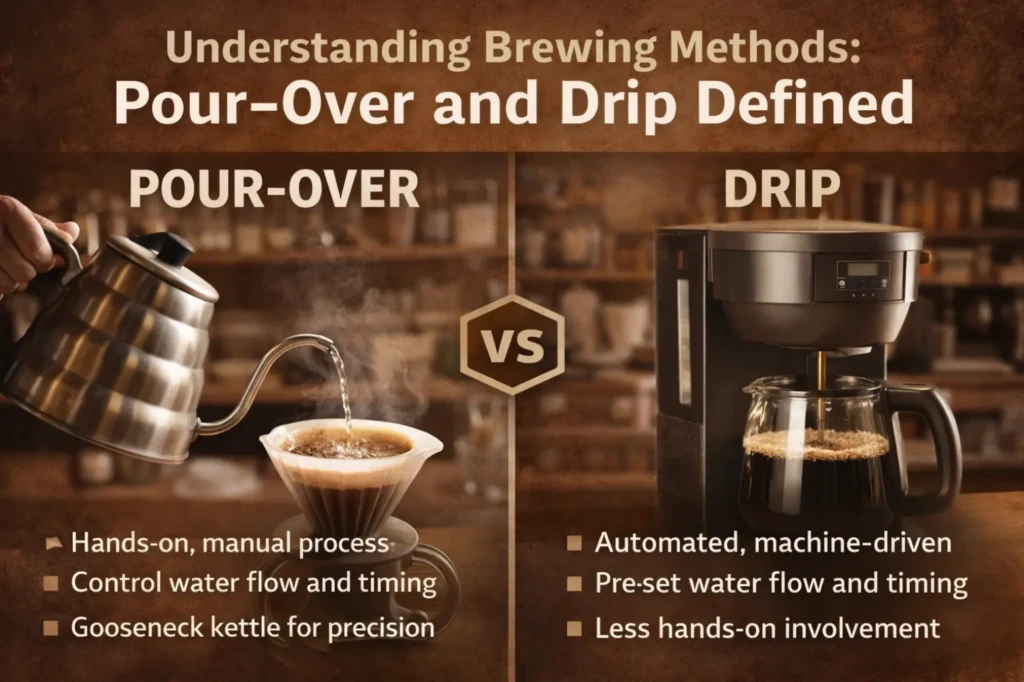
You might watch the bloom—the first release of gases—like a mini performance. Each pour shapes the cup’s character. By contrast, drip coffee leans on automation. Machines choreograph water flow and timing, delivering a reliable brew with less fuss. It’s like setting the stage once and letting the machine take over. This hands-on versus hands-off split defines how each method influences your coffee’s flavor and your role in crafting it.
The Sensory Experience: Flavor and Aroma Differences
Pour-over coffee often rewards patience and precision with cups that sing clarity and highlight bright, nuanced notes. Think of a light citrus zest, subtle florals, or juicy berry undertones that unfold sip after sip. Because you control water flow and extraction, you can coax out delicate aromas that might otherwise fade. Drip coffee, with its steady mechanical pour, tends to yield a fuller, more uniform body—comforting and familiar, but sometimes less intricate. The choice of filter adds its own twist: paper filters in both methods create a clean cup, but the pour-over’s meticulous saturation often sharpens the aroma, making the coffee smell like a fresh orchard or a blooming garden. It’s a sensory journey shaped by technique.
Brewing Control and Its Impact on Coffee Quality
Pour-over brewing hands you the levers: grind size, water temperature, pouring speed, and pattern. Tinker with these, and you’ll glimpse how subtle tweaks tilt flavor—from bright and floral to rich and chocolatey. It’s a playground for curiosity and fine-tuning. On the flip side, drip machines often lock these parameters to presets.
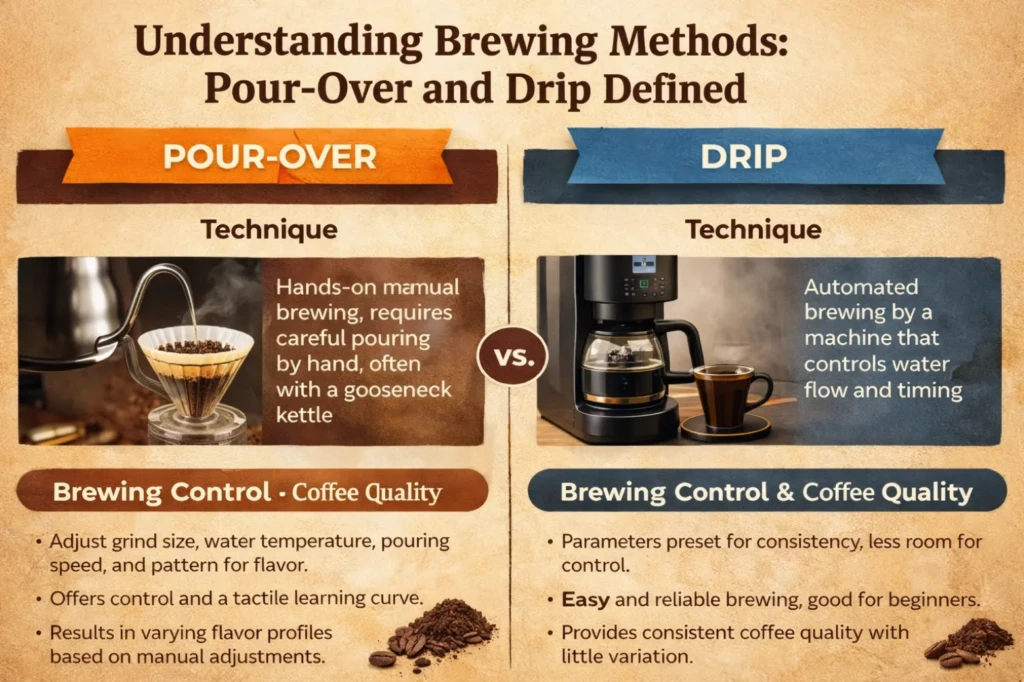
This isn’t a flaw—it’s a feature for those who want consistent coffee without fuss. But it means less room for experimentation. For beginners eager to understand how coffee reacts under different conditions, pour-over offers a tactile learning curve. It’s like unlocking coffee’s personality one variable at a time, while drip provides a dependable baseline every day.
Practical Considerations: Convenience vs Craft
Life moves fast, and coffee prep needs to keep pace—or offer a moment to slow down. Drip machines shine when you need multiple cups on demand, especially during hectic mornings or office rushes. Set it, forget it, and come back to a ready pot. Pour-over, meanwhile, calls for calm focus—measuring grounds, heating water, pouring in rhythm. It’s a ritual that invites you into the sensory world of coffee: the gentle hiss of boiling water, the swirling bloom, and the rich aroma curling skyward. While drip coffee fuels efficiency, pour-over offers a welcome pause—a chance to connect with the craft and savor the process as much as the cup.
Cultural Context and Coffee Rituals
Pour-over coffee isn’t just a method—it’s a symbol of the third-wave coffee movement, where origin stories, transparency, and skilled artisanship take center stage. Specialty cafes often set up pour-over stations in full view, turning brewing into a performance that draws curious eyes and deepens appreciation for the beans’ journey. Drip coffee holds a solid place too, anchoring daily routines worldwide with its reliable simplicity. This contrast tells a larger story: brewing methods don’t just shape coffee’s flavor, they reflect how communities connect with the beverage—from quick energy boosts to mindful rituals steeped in culture and craft.
Choosing Your Ideal Method: A Beginner’s Perspective
For those just entering the world of coffee, choosing between pour-over and drip comes down to lifestyle and preference. If mornings demand speed and volume, drip machines deliver dependable cups with little thought, freeing you to focus elsewhere. But if curiosity pulls you toward discovering coffee’s delicate layers and engaging in the brewing dance, pour-over invites exploration and a deeper bond with your cup. Many beginners enjoy trying both, appreciating how small differences in pouring speed or grind size can transform flavor. This hands-on knowledge turns casual sipping into a richer, more personal coffee journey.
Conclusion
Starting out in coffee can feel like stepping into a vast, aromatic landscape. Knowing how pour-over and drip differ clears the path, revealing how brewing choices shape everything from taste to ritual. Pour-over brewing is a hands-on craft that brings out vibrant complexity and a tactile connection to coffee’s nuances. Drip coffee brings steady consistency and ease, perfect for busy rhythms. Recognizing these contrasts empowers you to pick the method that fits your palate and pace, opening the door to a more flavorful and meaningful coffee experience.

